
 Login / Signup

Beat the Heat: 5 Pro-Grade Hacks to Cool Your Home This Summer

Jun 24, 2026
Beat the Heat: 5 Pro-Grade Hacks to Cool Your Home This Summer
By: Mike Alarcon
When the summer humidity starts to feel like a wet blanket, most homeowners have one move: crank the AC and pray for the best. But if you look at your home the way a commercial contractor looks at a high-rise, you realize that cooling isn't just about blowing cold air -- it’s about thermal management.
You don't need a massive HVAC overhaul to make a dent in your indoor temperature. You just need to stop thinking like a consumer and start thinking like a builder. By using the "hidden" inventory at the supply house, you can outsmart the heat. Here are five ways to "overbuild" your summer defense using the same materials the pros use.
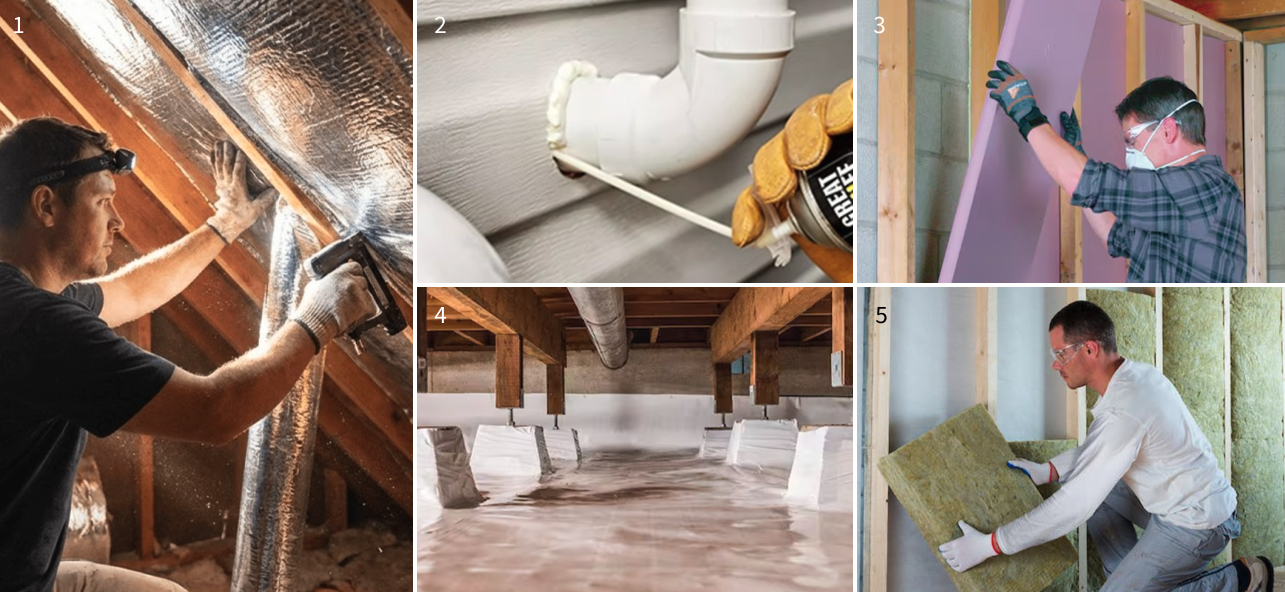
■ 1. The Radiant Barrier "Space Blanket"
Your attic is a giant heat battery. On a 90°C day, your attic can easily hit 140°C, radiating that heat straight down through your ceiling. Standard fiberglass insulation slows this down, but it eventually "soaks" up the heat.
-
The Pro Move: Radiant Barrier Foil
-
The Hack: You don’t have to pull up your floors. Stapling a radiant barrier (a heavy-duty foil-faced material) to the underside of your roof rafters reflects up to 97% of that radiant heat back out through the roof. It’s the same tech used in space suits, and it keeps your attic -- and your bedroom -- significantly cooler.
■ 2. Seal the "Silent" Leaks
You can have the best insulation in the world, but if your conditioned air is escaping through "bypass" leaks, you’re literally cooling the neighborhood.
-
The Pro Move: Professional Expanding Spray Foam & High-Performance Caulk
-
The Hack: Go into your basement or crawlspace and look for "penetrations" -- places where pipes, wires, or vents go up into the walls. Use a pro-grade, low-expansion foam to seal those gaps. This stops the "chimney effect," where cold air (which is heavy) falls out the bottom of your house, creating a vacuum that sucks hot, humid air in through the top.
■ 3. Continuous Insulation with Rigid Foam
In a standard wall, heat travels through the wooden studs via "thermal bridging." Your studs act like a bridge for the heat to bypass your insulation.
-
The Pro Move: Rigid Foam Insulation Boards (XPS or EPS).
-
The Hack: If you’re finishing a garage, a shed, or an attic room, don’t just stuff batts between the studs. Add a layer of rigid foam board over the face of the studs before you hang drywall. This creates a "continuous thermal break" that stops the heat bridge and gives you a much higher R-value per inch than traditional fluff.
■ 4. Manage the Ground Moisture
In many parts of the country, "heat" is actually a humidity problem. Your AC has to work twice as hard to wring the water out of the air before it can effectively lower the temperature.
-
The Pro Move: Heavy-Duty Vapor Barriers
-
The Hack: If you have a crawlspace, check the ground. If it’s bare dirt, moisture is constantly evaporating into your floor joists and up into your living space. Encapsulating that ground with a 10-mil or 15-mil poly vapor barrier (the thick stuff pros use for foundations) keeps that moisture out, making your home feel 5°C cooler instantly.
■ 5. Swap the "Pink Stuff" for Mineral Wool
If you have a wall open for a renovation, don’t just grab the standard retail fiberglass.
-
The Pro Move: Mineral Wool Batts (Stone Wool)
-
The Hack: Mineral wool is made from volcanic rock and slag. It’s incredibly dense, which makes it a superior thermal performer compared to fiberglass. It doesn't sag over time, it’s fire-resistant, and it’s a world-class sound dampener. It creates a "quiet, cool cave" feeling that retail-grade materials just can't match.
The Bottom Line
Keeping your home cool is a game of physics. By using commercial-grade barriers and high-density insulation, you aren't just surviving the summer; you’re managing your home’s "envelope" like a professional. Most of these materials are sitting right there in the FBM warehouse, waiting for the homeowner who’s ready to build something better.